Oct 9, 2026Clinic Workflow & Care
Veterinary Equipment Handover: Clinic Staff Checklist
A practical clinic staff handover checklist for equipment records, room ownership, team training, cleaning responsibilities and follow-up notes.
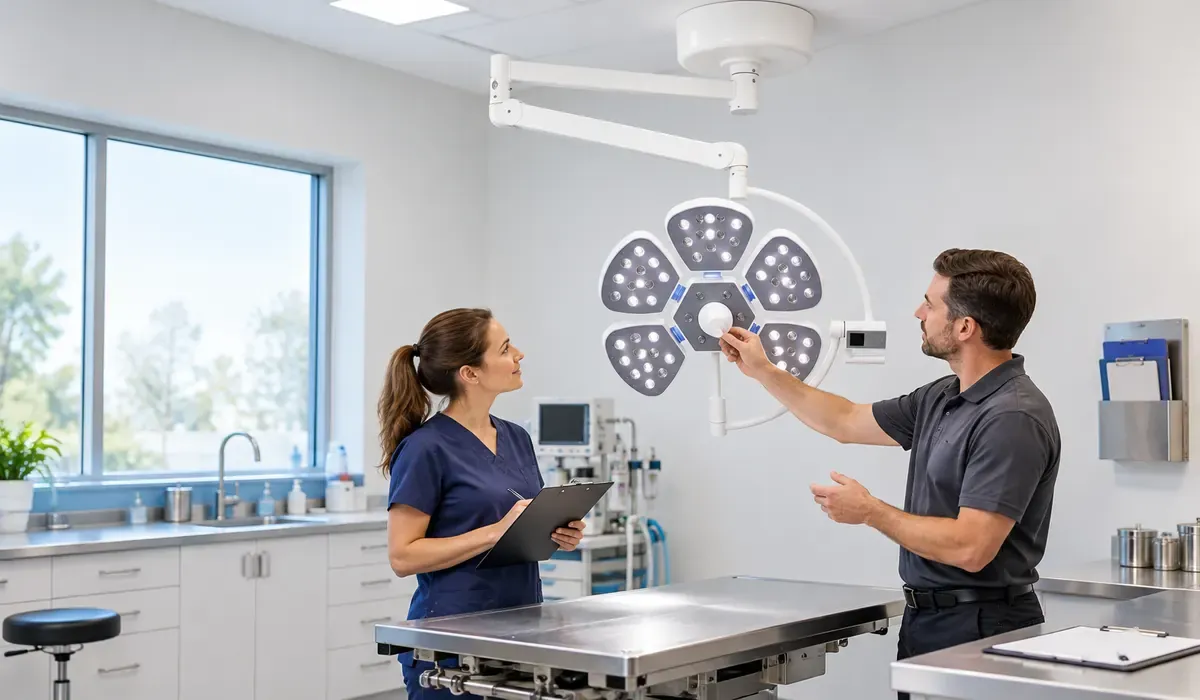
The installer has left, the room looks finished and the clinic is ready to move on to the next job. That is exactly when ownership can become unclear: the equipment record is in purchasing, the cleaning notes are with nursing, and nobody knows who should log the first question about a control or accessory.
A clinic staff handover is a simple way to turn a newly installed product into a managed piece of equipment. It gives the people who use, clean and maintain the room the same reference point.
Image note: Real Vetese VTS-700-F product imagery combined with an AI-generated clinic setting.
Create one equipment record
Record the model, serial or batch information when supplied, room location, purchase reference, final configuration and the options that affect daily use. A product family name is not enough when several versions look similar. Give the record a clear name that staff can find without knowing the supplier's internal file structure.
Name the people who own the next steps
Separate ownership into practical roles: the room lead who checks day-to-day use, the person responsible for cleaning guidance, the facilities or engineering contact for building and electrical questions, and the purchasing contact for supplier communication. One person can hold several roles, but each role should have a name.
Walk through the room as a working team
Ask the room lead and a second staff member to demonstrate the normal sequence around the equipment. For a surgical light, that may include moving the arm, using the control and returning it to its parked position. For a table or cage, it may include access, trays, doors or brakes. Record questions that cannot be answered from the supplied documents instead of guessing.
Keep a short training sign-off
The sign-off does not need to be a long course. Note who attended, which controls or accessories were demonstrated, where the manual is stored and which questions remain open. When staff change, the record gives the next person a starting point instead of relying on a colleague's memory.
Store documents by the way staff search
Keep the product manual, installation drawing, cleaning instructions, parts information and supplier contact details together. Use the clinic's room name and equipment name in the file title. If the clinic uses a digital system, link the documents to the equipment record and keep the final drawing version visible.
Assign cleaning responsibility without inventing a protocol
Record which surfaces and removable parts the supplier identifies for routine care, then link that information to the clinic's approved cleaning procedure. The handover should make responsibility clear; it should not create a new clinical or infection-control rule. Questions about agents or methods should go through the clinic's authorised process.
Create an everyday exception log
Give staff one place to note a loose accessory, unusual movement, damaged surface, control question or document gap. The log should capture the date, room, equipment record, person reporting it and next owner. This is more useful than scattered messages because purchasing, nursing and facilities can see the same history.
Copy maintenance guidance exactly as supplied
Add the supplier's inspection or maintenance guidance to the equipment record without creating an interval from memory or from another model. If a local professional sets a separate requirement, keep that note distinct and identify its source. The goal is a traceable record, not a made-up schedule.
Review ownership after the first few weeks
After the room has been used in normal work, ask what staff still look up, what gets missed during cleaning and which questions keep returning. Update the record and training note while the details are fresh. A handover is a living clinic document, not a file that disappears after installation.
Send focused questions to the supplier
When a question needs supplier input, send the model and order reference, the equipment record, a clear photo or drawing mark-up and the exact issue. For a custom configuration, include the approved drawing version so the answer relates to the equipment the clinic actually received.
A simple staff-ownership check
Before the room returns to routine work, confirm: one equipment record exists; room, cleaning, facilities and purchasing owners are named; the core controls were demonstrated; documents are findable; and there is one place for exceptions and open questions. Keep a dated copy with the clinic's equipment records.
Common veterinary equipment handover questions
Is a delivery receipt the same as a staff handover? No. A receipt records arrival; a staff handover gives the clinic a shared record, named owners and a practical training trail.
Who should own the equipment record? The clinic should nominate a room or equipment lead who can keep the record current and route technical or building questions to the appropriate professional.
What if staff cannot answer a control question? Record the exact model and question, keep the item open and request clarification from the supplier or the responsible technical professional instead of guessing.
Vetese manufactures stainless-steel veterinary cages, operating and treatment tables, surgical lights and related clinic equipment. When requesting a quotation or custom configuration, keep the final drawing and equipment record with the clinic project. Final operation, maintenance and installation decisions should follow the exact supplier documentation and applicable local requirements.