How to Choose a Veterinary Surgical Light for Clear, Low-Shadow Procedures
A practical guide to choosing veterinary surgical lights for low-shadow illumination, color rendering, positioning, heat control and clinic installation.
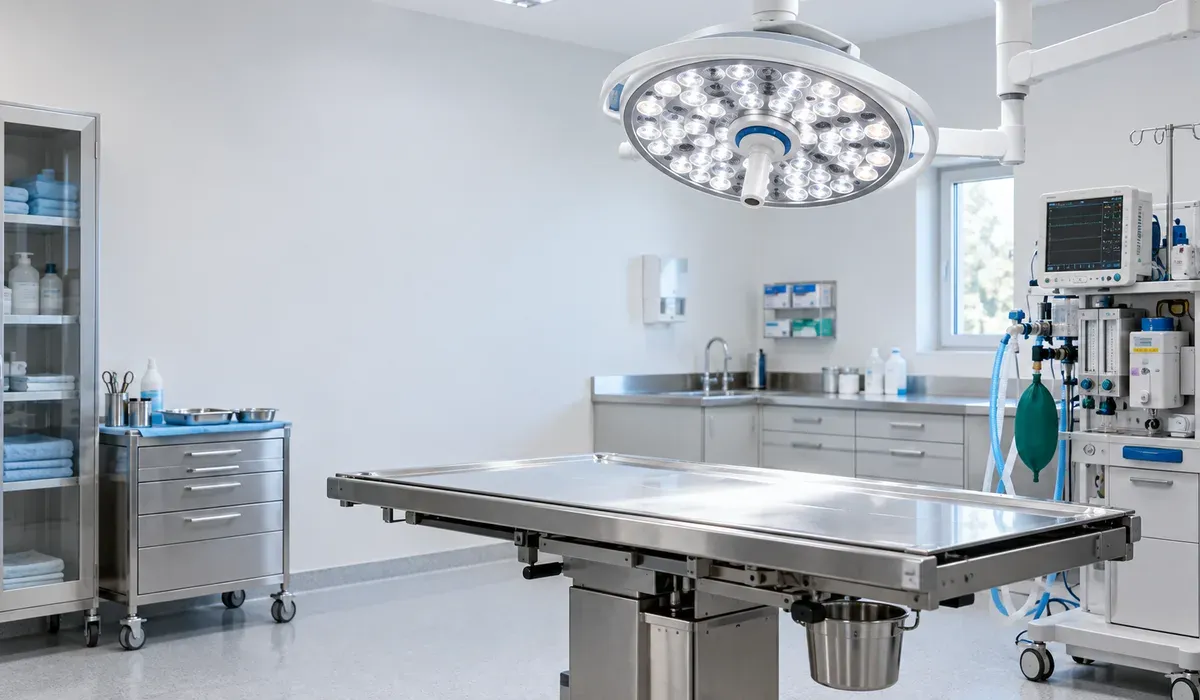
A veterinary surgical light has to do more than make the room look bright. It must help the team keep a useful field of view when hands, instruments or staff move between the light and the table. Poor positioning, harsh glare or difficult controls can turn lighting into a repeated workflow problem.
Quick answer: what should a clinic compare?
Compare the intended procedure, adjustable illuminance, shadow control, color rendering, color temperature, field size, heat at the working area, arm movement, controls and installation space. The best choice is not automatically the model with the highest Lux figure; it is the light the team can position and adjust consistently in the real room.
Decide whether you need an examination light or an operating light
An examination light may be appropriate for consultations, wound checks and focused treatment tasks. A surgical or operating light is designed for a larger working field and more demanding positioning. List the procedures performed in the room before comparing models, because buying for the room name alone can lead to too little coverage or unnecessary complexity.
Check shadow control in the way your team actually works
Ask how the light performs when part of the beam is interrupted and whether the head can be repositioned without losing stability. In a compact veterinary room, the arm must clear cabinets, monitors and staff while keeping the light centered over the table. A stable, easy-to-grip handle and predictable arm movement are practical details worth testing or confirming on a drawing.
Review color rendering and color temperature, not brightness alone
Color rendering describes how naturally colors appear under the light, while color temperature affects whether the field looks warmer or cooler. Adjustable settings can help a clinic match different tasks and staff preferences. Ask the supplier for the available range and control method, then compare those figures with the work performed in the room.
Consider heat, controls and cleaning between cases
A light may run for long periods, so the clinic should ask about heat management around the light head and working field. Controls should be visible and reachable without disrupting the room setup. Also check which surfaces are touched most often, whether the handle is removable or easy to disinfect, and whether seams around the light head are accessible for routine cleaning.
Choose mobile, wall-mounted or ceiling-mounted positioning
A mobile light can serve more than one room and avoids permanent ceiling work, but it needs floor space and a stable base. A wall-mounted light can preserve floor space in a fixed treatment area, but the wall structure, mounting position and arm reach must match the table location. A ceiling-mounted system keeps both the wall and floor clear, yet the ceiling structure, mounting height, electrical supply and arm reach must be confirmed before ordering. Send a room plan with the table position, ceiling height, wall and ceiling construction, nearby equipment and required movement area rather than relying on a single room measurement.
What should you send the supplier?
Provide the room dimensions, ceiling height, table location, intended procedures, preferred mounting style, electrical requirements, quantity and destination market. If you are replacing an existing light, include photos and mounting details. Ask for a specification sheet and installation drawing so the clinic can review arm reach, clearances and connection requirements before production or shipment.
Common questions from veterinary clinics
Is a higher Lux number always better? No. The useful choice depends on adjustability, field coverage, shadow control and how the light is positioned for the procedure.
When is a mobile light practical? It is useful when rooms share equipment or permanent installation is not suitable, provided the base can move and lock safely within the available floor space.
What should be confirmed before ordering a ceiling-mounted light? Confirm the ceiling structure, mounting height, power connection, arm reach, table position and clearance from other equipment.
Compare documented lighting specifications
For a focused examination-light example, the VTS-JD1700W 30W LED Veterinary Examination Light lists a 4500–5500K color-temperature range and CRI 96. For a mobile operating-light example, the VTS-700-F-M Mobile Single-Head LED Veterinary Operating Light lists adjustable illumination from 40,000 to 180,000 Lux, a 3500–5000K color-temperature range and CRI 85–98. These figures are comparison inputs, not a substitute for checking the room, procedure and installation requirements.
Explore the Vetese Surgical & Operating Lights range, or contact Vetese with the room dimensions, mounting preference, intended procedures and required quantity.
Nantong Vetese Medical Technology Co., Ltd. manufactures veterinary surgical lights and stainless steel veterinary equipment in Nantong, China.