Veterinary Equipment Guides
Veterinary Examination Table Buying Guide: Height, Surface & Stainless Steel
Height, size, 304 stainless steel, stability and cleaning — a practical guide to choosing a veterinary examination table that fits your rooms, your patients and your daily workflow.
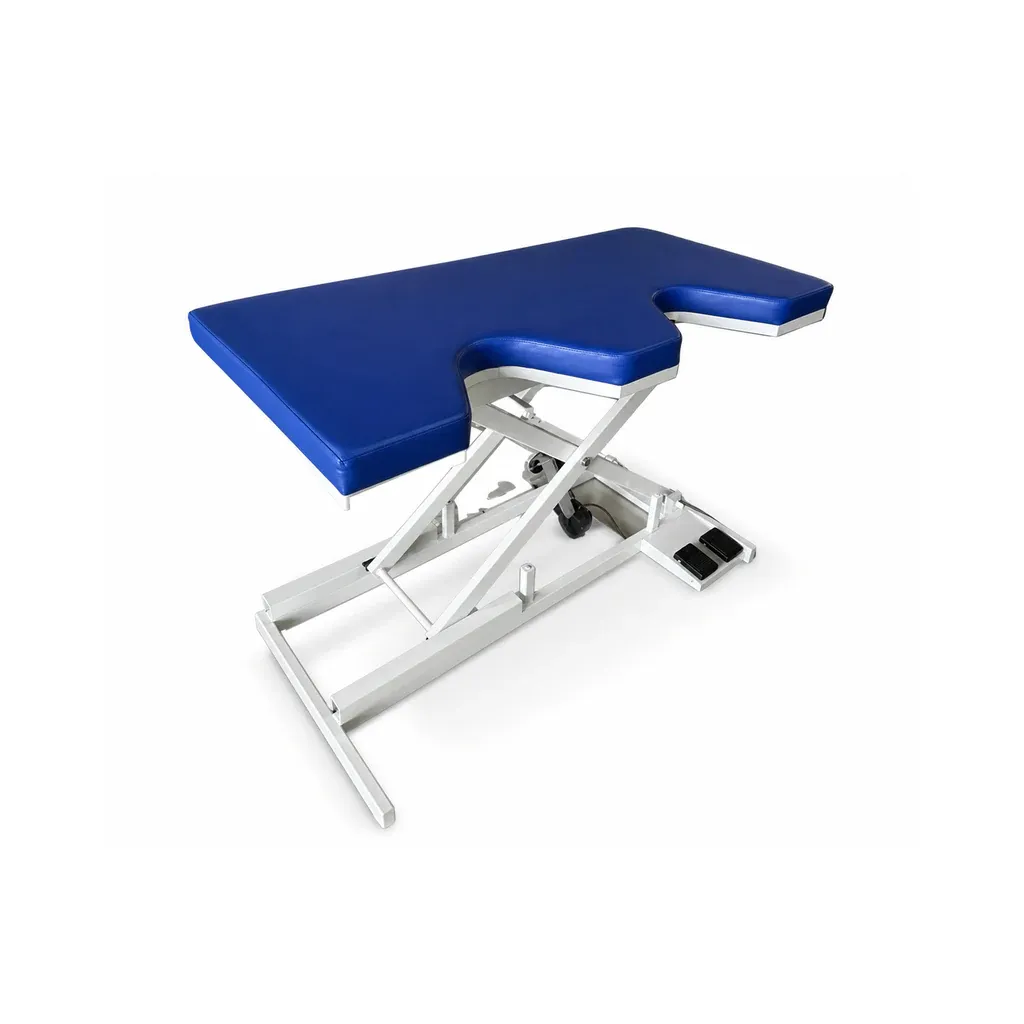
An exam table sits at the center of every consultation room, bearing the brunt of frantic paws, chemical disinfectants, and back-to-back appointments. Buying the wrong one usually means sore lower backs for your clinical staff, stubborn rust in the corners, or a table that wobbles the moment a nervous Labrador scrambles onto it. This guide breaks down the core practical features you should evaluate before choosing your next exam table.
- Height Adjustment and Working Posture
A fixed-height table works fine if every clinician is the same height and every patient is a calm domestic shorthair. In reality, patient sizes swing from 3-pound kittens to 90-pound Golden Retrievers. Electric and hydraulic lift systems allow technicians and veterinarians to position the patient at an ergonomic elbow level. For heavy or geriatric dogs, lowering the platform close to the floor lets the animal step on comfortably without two staff members risking acute spinal strain to lift them. When choosing lift mechanisms, look for quiet motors and smooth foot-pedal controls; jerky elevation or loud motor hums immediately spike an animal's anxiety before the thermometer even comes out.
- Tabletop Size by Animal and Room
Room dimensions and caseload determine the right footprint. A standard exam room usually balances maneuverability with surface area:
Compact / Feline Rooms: Tabletops around 44 to 48 inches long save floor space, leaving adequate clearance for wall-mounted diagnostic units and doctor stools.
General / Mixed Practice: Platforms measuring 48 to 52 inches in length and 20 to 24 inches in width accommodate the vast majority of medium-to-large breeds while keeping the animal within arm's reach.
Always measure door swings and walking clearances first. Your team needs enough space to move completely around the table during orthopaedic or neurological assessments without bumping against supply counters.
- 304 Stainless Steel Top, Frame, Welds, and Edges
The veterinary environment is notoriously harsh on metals. Blood, urine, saline, and concentrated disinfectants quickly pit and corrode cheaper alloys or thin chrome plating.
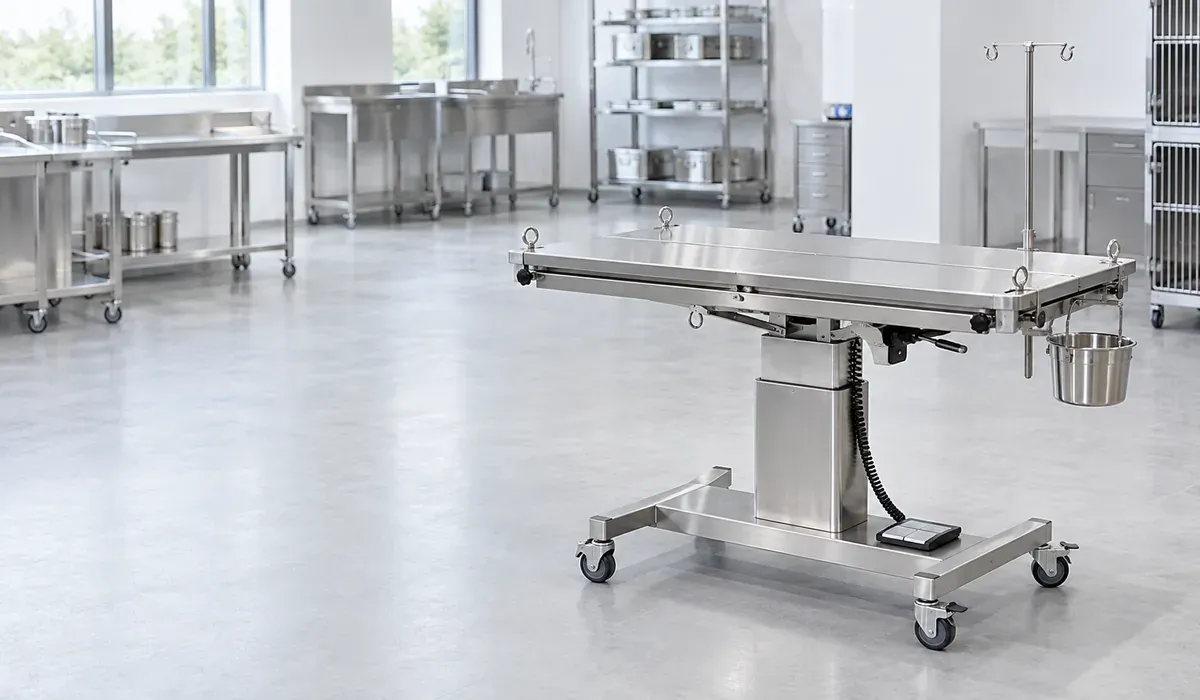
Specify veterinary-grade 304 stainless steel for both the tabletop and structural chassis. Pay close attention to fabrication details:
Welds: Look for continuous, ground-smooth welds. Spot-welded seams leave microscopic gaps that trap moisture and organic matter.
Edges: Table edges should feature rounded bullnose profiling or slight marine containment lips to keep accidental spills from dripping onto the floor and control panel.
Underside: Check underneath the top plate. High-quality tables use dampening sub-frames to eliminate metallic “drumming” noises that spook animals when their claws click down.
- Weight Capacity, Stability, and Non-Slip Surfaces
A table rated for a patient's weight can still feel precarious if the base design is too narrow. Large breeds generate strong lateral force when thrashing or trying to bolt.
Opt for an H-frame or wide scissor-lift base with heavy-gauge tubular steel and adjustable leveling feet to compensate for uneven clinic flooring. Bare stainless steel is notoriously slick for paws; pair the table with textured, antimicrobial silicone mats or ribbed rubber toppers. Providing secure footing reduces fear-related resistance and prevents sudden cruciate strains during standing palpations.
- Cleaning, Drainage, and Daily Reset
Infection control between consultations must take under two minutes. Avoid tables with exposed wiring harnesses, open screw threads, or deep crevices where fluids pool.
If your clinic uses the table for minor wound flushes, abscess lancing, or basic dental exams, choose a top with an integrated fluid drainage channel leading to a bucket hook or waste outlet. Smooth, seamless transit points allow disinfectants to sit for their required contact time and wipe dry cleanly, resetting the room quickly for the next patient.
Quick Comparison: Exam Table Base Styles
Base Type | Height Control | Best Use Case | Maintenance Focus |
Fixed Frame | None (Static) | Dedicated cat rooms, fast triage rooms | Simple wipe-down, floor leveling feet |
Hydraulic Foot-Pump | Manual pedal pump | Wet rooms, areas without wall outlets | Fluid seals, hydraulic fluid checks |
Electric Scissor / Column | Dual foot/hand switches | High-volume general practice, large breeds | Cable routing, motor dust seals |
Frequently Asked Questions
Why choose 304 stainless steel over 201 stainless steel?
Grade 304 contains higher nickel and chromium content, providing superior resistance against chlorine-based veterinary sterilants, ammonia in urine, and constant wet exposure. Grade 201 is prone to surface rust and pitting over time.
Can an electric lift table be washed down with water?
Standard exam tables are splash-resistant for routine wipe-downs, but their electrical actuators and pedals should not be hosed down directly unless specifically rated for wet-table surgical washdown.
What is the practical lifespan of an exam table base?
A heavy-gauge stainless steel frame lasts well over a decade. Lift mechanisms typically deliver many years of service depending on daily volume, provided moving joints are kept clean of animal hair and debris.
Source Directly from Vetese
If you are outfitting a new hospital wing or replacing aging clinic furniture, sourcing directly from a proven manufacturer simplifies the process. Vetese has been manufacturing veterinary equipment in China since 2011. Operating from a 2,560-square-meter facility with an experienced team of 87 specialists, we produce fully certified equipment compliant with ISO and CE standards. We support animal clinics, regional hospitals, and equipment dealers worldwide with flexible procurement: our minimum order quantity starts at just 1 piece, and standard orders ship approximately 10 days after payment confirmation. Contact Vetese today to discuss custom sizing, request technical documentation, and receive a direct factory quote.