Sep 26, 2026Veterinary Equipment Guides
How Stainless Steel Veterinary Cages Support Safer Clinic Workflows
A practical guide to choosing stainless steel veterinary cages for hygiene, ventilation, daily handling and custom clinic layouts.
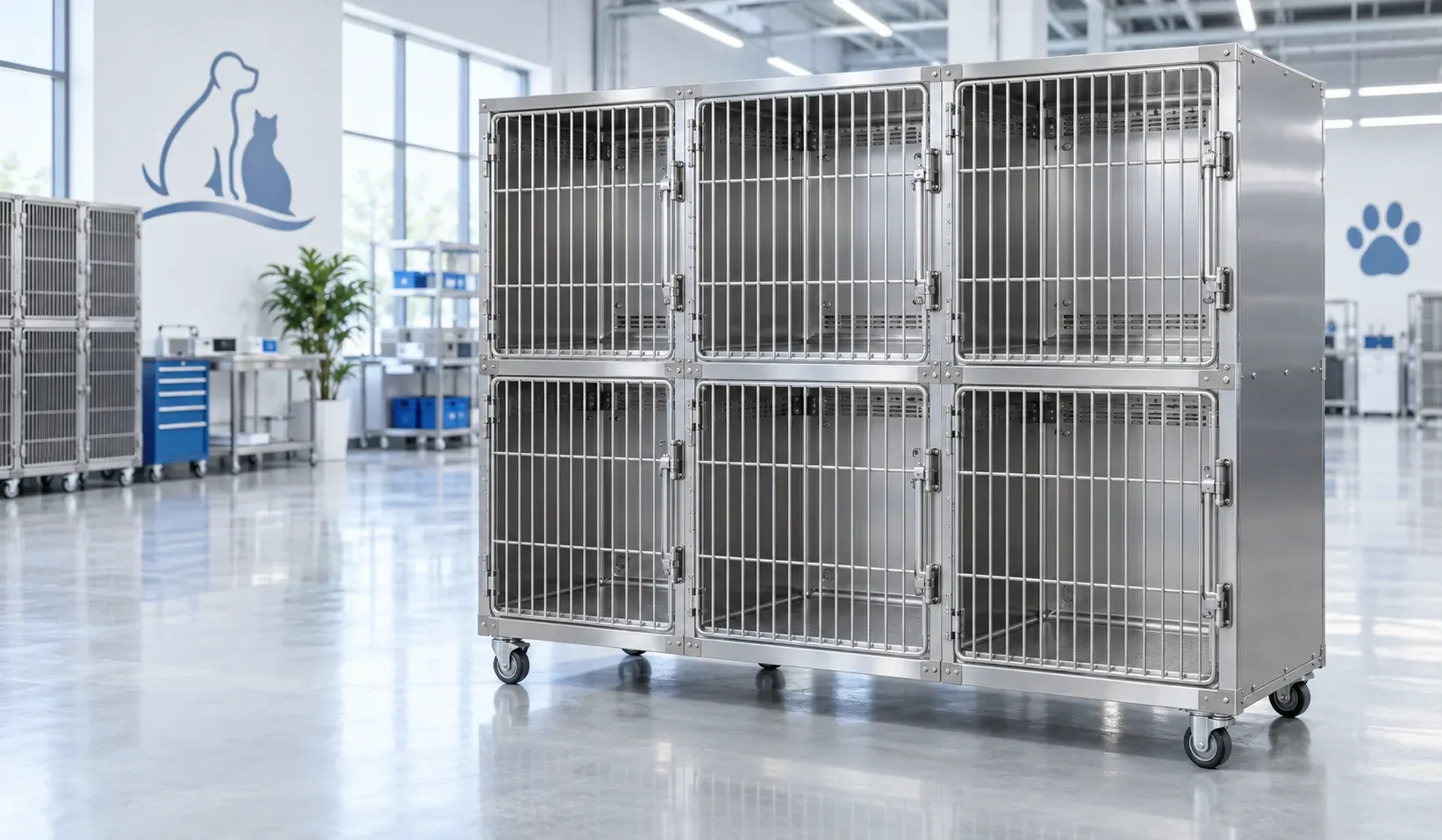
Choosing a veterinary cage is less about how it looks in a catalogue and more about what happens during a busy clinic day. Staff need to clean it quickly, move animals safely and open every compartment without fighting the surrounding equipment.
Where cage designs create daily problems
Hair, bedding and fluids often collect around trays, corners and door frames. If these areas are difficult to reach, cleaning takes longer and the cage is harder to keep ready for the next patient. Before ordering, ask how the tray is removed, whether the rear panel is accessible and how the surfaces will be disinfected.
Measure the room before choosing the layout
Record the available wall length, doorway width and working clearance. Then confirm the internal width and height required for the animals you handle. A cage can fit on the wall and still be impractical if the doors hit a table or the staff cannot stand comfortably in front of it.
Check the parts staff use every day
Look closely at door swing, latch access, tray handles and wheel locks. Lockable casters are useful when the cage must be moved for cleaning, while fixed feet may be better for a permanent installation. Ask for drawings or a product sample specification when these details are not clear.
Plan for cleaning and maintenance
Stainless steel is a practical choice for veterinary environments because it is durable and easy to clean. The construction still matters: smooth welds, accessible panels and removable components make a bigger difference than the material name alone.
What to send when requesting a custom quotation
Share the overall dimensions, compartment layout, door direction, tray preference, caster or foot choice, quantity and destination market. A marked-up photo or simple drawing can help the factory confirm the configuration before production.
Vetese manufactures stainless steel veterinary cages and related veterinary furniture in Nantong, China. We review clinic workflow requirements, custom dimensions and OEM or ODM
Related Vetese resources
Explore our Veterinary Cages collection, review Vetese veterinary equipment, or contact the Vetese factory team about custom dimensions and OEM / ODM requirements.
configurations so buyers can confirm the practical details before ordering.