Oct 20, 2026Veterinary Equipment Guides
Veterinary Cage Cleaning and Disinfection: A Buyer's Checklist
A practical veterinary cage cleaning and disinfection checklist covering stainless-steel surfaces, removable trays, seams, ventilation, disinfectant compatibility, isolation workflow and questions to
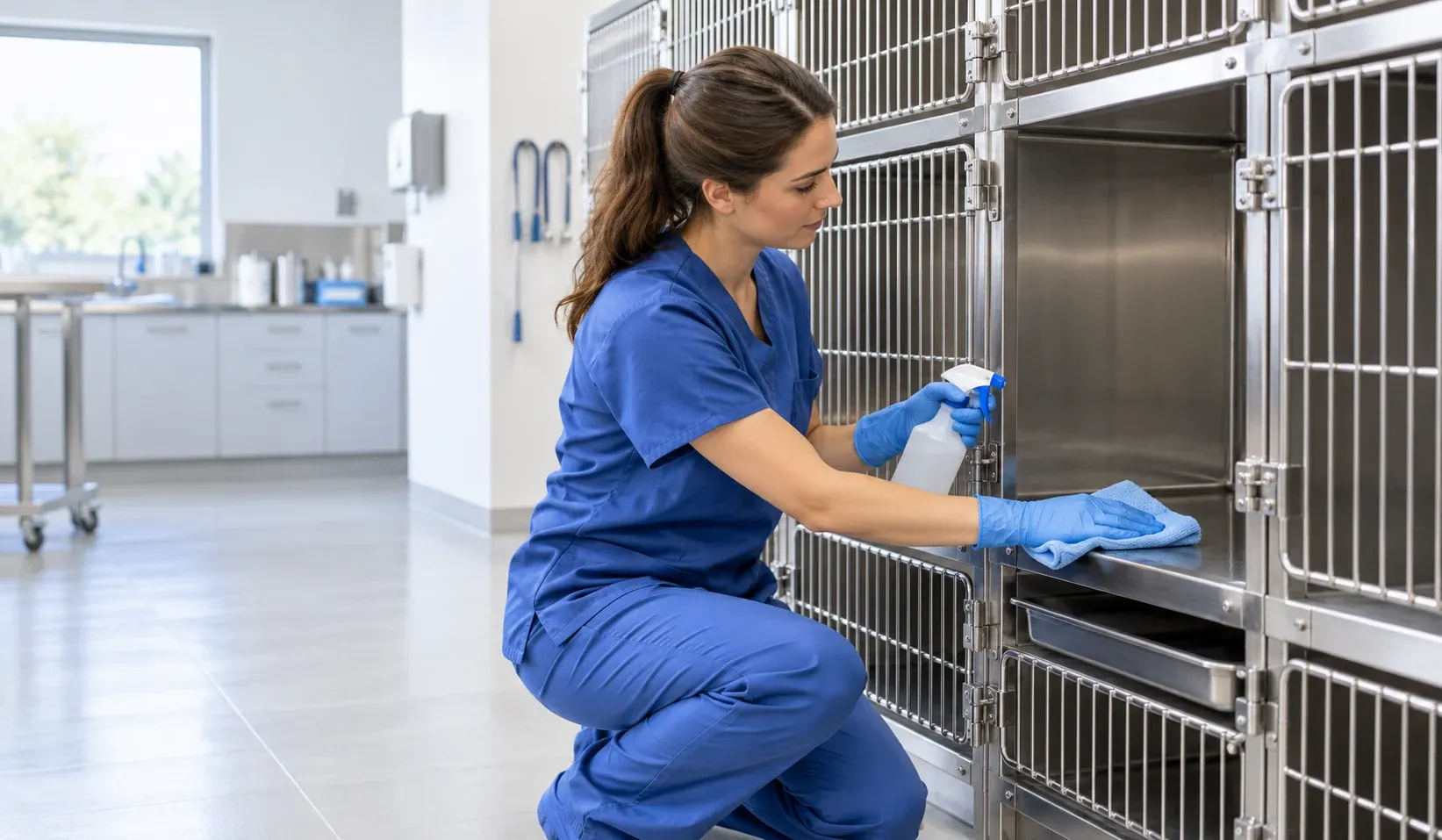
A cage can look clean and still create extra work for the veterinary team. The important question is whether staff can clean, rinse, dry and inspect every surface between patients without moving the whole cage bank or missing a hidden edge. This buyer's checklist focuses on the details that affect daily infection-control work.
1. Start with the surfaces staff can actually reach
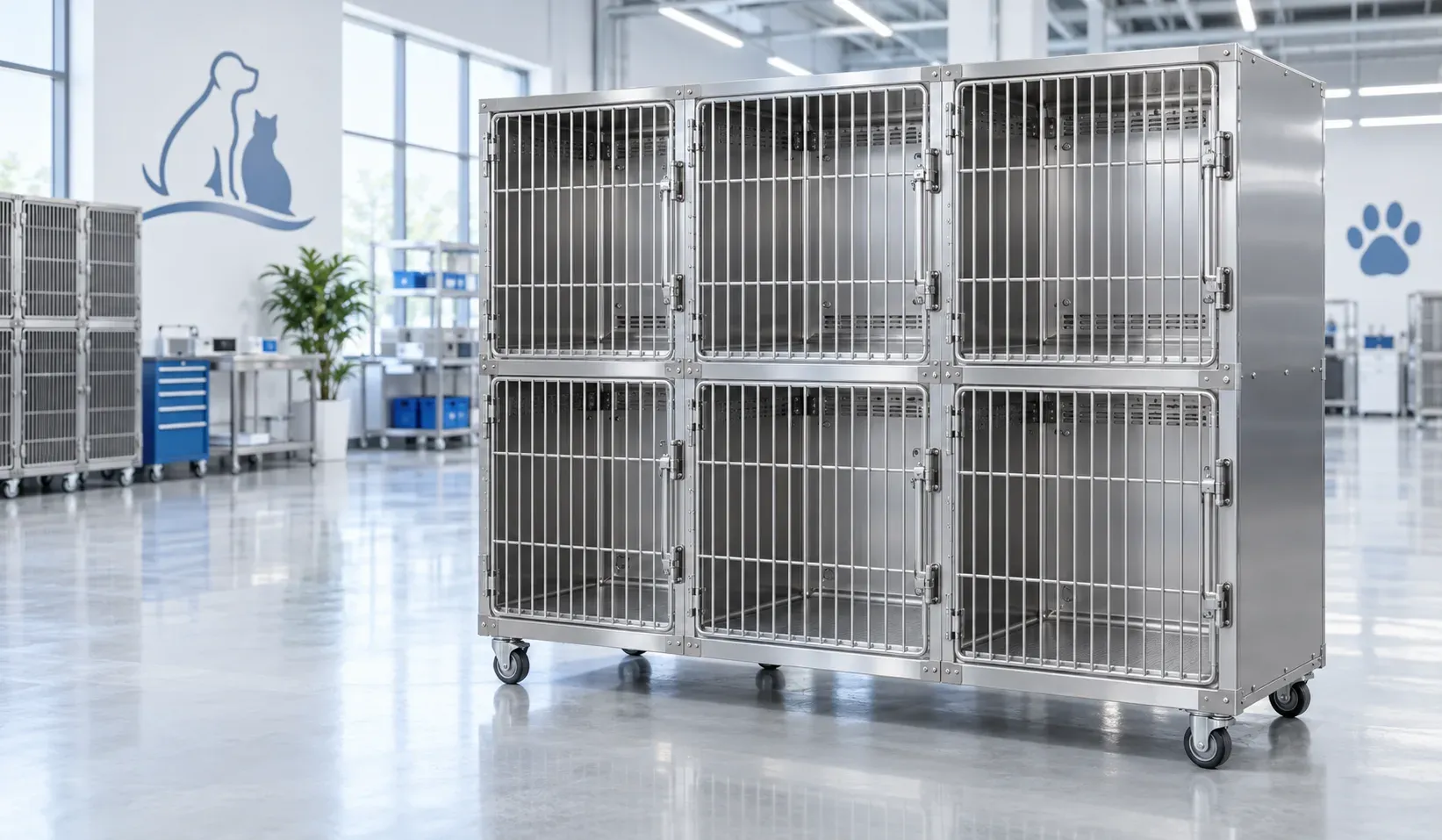
Ask the supplier to show how staff reach the back corners, door frames, hinges, latches and the underside of each compartment. Smooth stainless-steel panels are easier to wipe than rough welds, exposed fasteners or deep joints. A useful cage design keeps the working surfaces visible and accessible instead of relying on a narrow gap behind a fixed panel.
2. Check the floor, tray and drainage path
The cage floor should support routine washing without trapping hair, litter or fluids. Removable trays are useful only when they can be taken out safely, carried without spilling and returned without catching on the frame. Confirm the tray depth, edge finish, slope and clearance under the cage. If the clinic uses a hose or pressure washer, ask where the water will go and how the surrounding floor will be protected.
3. Confirm disinfectant compatibility
Do not choose a cage from the phrase “stainless steel” alone. Ask which grade is used for the panels, frame, tray and hardware, and whether the finish is suitable for the disinfectants used in your clinic. Repeated exposure to strong chemicals, standing moisture and salt residue can damage poor finishes or create corrosion around welds and fasteners. The supplier should provide cleaning guidance for the actual materials supplied.
4. Look at doors, latches and patient separation
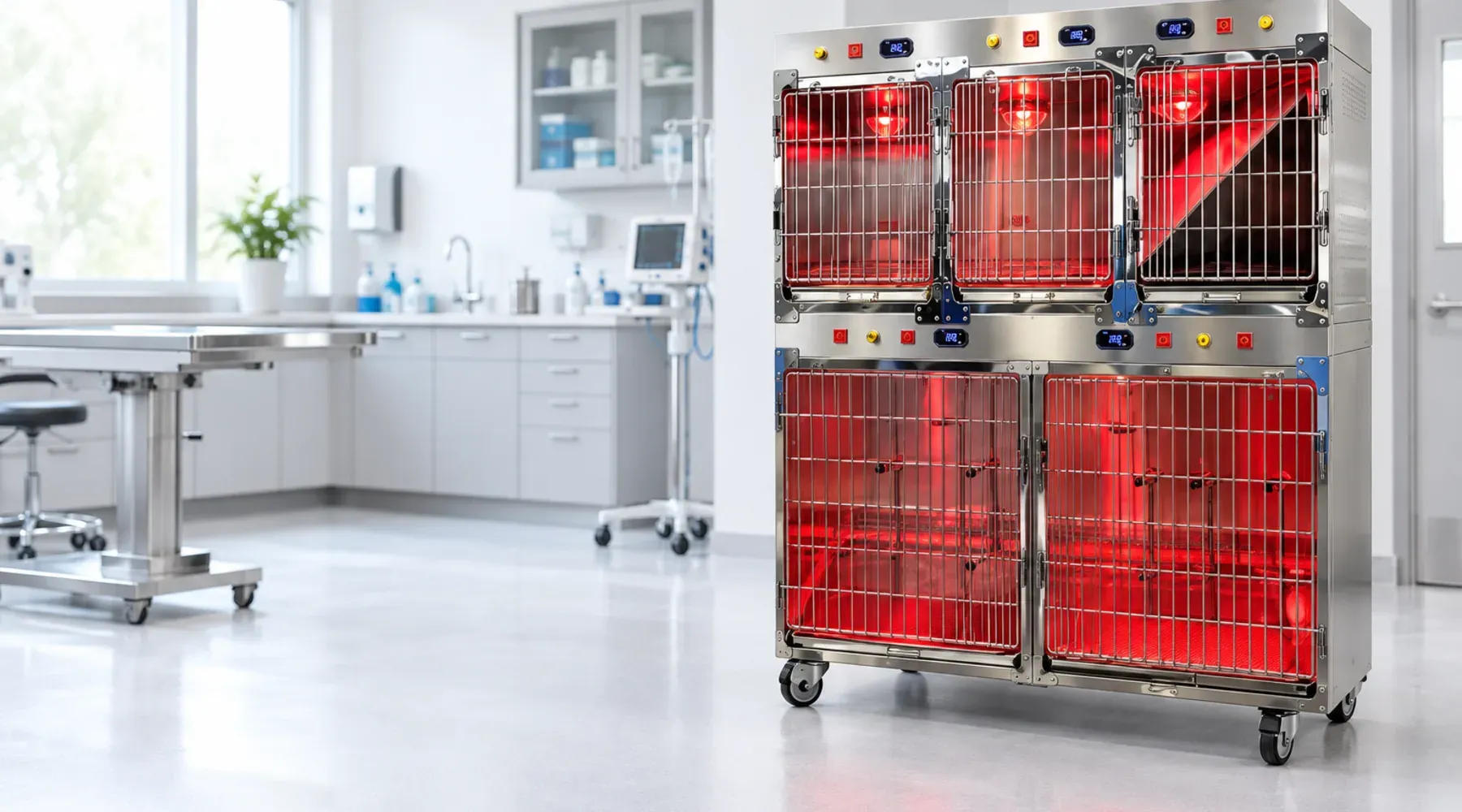
A door that opens smoothly with gloved hands reduces handling time. Check that the latch can be seen and operated without placing fingers near the patient. For isolation areas, verify the separation between compartments, the visibility of the patient and the possibility of cleaning one compartment without contaminating the next. If oxygen, intensive monitoring or quiet recovery is required, confirm the relevant fittings before production.
5. Inspect ventilation and drying after cleaning
Good ventilation helps the compartment dry after washing and supports a healthier room workflow. Ask where air enters and leaves, whether the openings can be cleaned, and whether the design creates a hidden dust shelf. The cage should not depend on decorative grilles that are difficult to remove or disinfect.
6. Ask how the cage bank will be installed
Measure lift doors, corridor turns, room doors and the final installation area before ordering. A cage bank may fit on paper but fail at the last corner of the delivery route. Confirm packed dimensions, module connections, levelling feet, wall clearances and whether the supplier provides an installation drawing.
7. Questions to put in the quotation
Before approving a veterinary cage bank, ask for the stainless-steel grade, sheet thickness, weld and edge treatment, tray dimensions, door hardware, ventilation layout, cleaning instructions, warranty scope, packed dimensions and installation requirements. Also state the number of compartments, patient sizes, isolation needs and any required custom dimensions.
For related equipment, see our veterinary cages and furniture range and the guide on choosing veterinary cages for daily cleaning and patient care. If your clinic needs a cage bank with custom dimensions or a different compartment layout, contact Vetese with your room measurements and workflow requirements.
A cage is easier to manage when cleaning is considered at the design stage. The best specification is the one that helps staff work safely and consistently every day.