Factory & Manufacturing
Stainless Steel Thickness for Veterinary Equipment: Gauge, Strength and What to Check
Two cages can look identical in photos and feel very different after six months. Gauge, sheet thickness and where it matters — a factory-side guide for buyers.
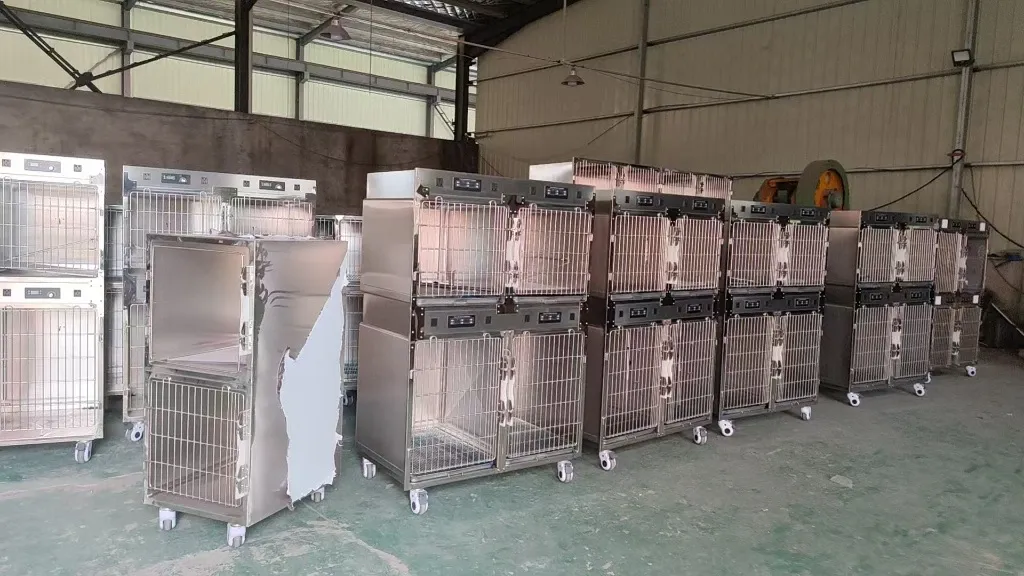
Two cage banks can look identical in a supplier's photos — same shine, same doors, same wheels. Six months later, one still closes with a click; the other's doors drag and a corner flexes when a big dog leans on it. The difference is often something nobody asked about before ordering: how thick the steel is.
What gauge actually means
Steel sheet is sold by gauge, and the numbers run backwards: a lower gauge means thicker steel. As a rough reference, 18 gauge is about 1.2 mm, 16 gauge about 1.5 mm, and 14 gauge about 2 mm. A supplier who only says "stainless steel" has told you nothing about grade or thickness. Ask for both in writing, and ask for thickness in millimetres — gauge tables vary a little between countries, millimetres don't.
Gauge is half the story: grade decides rust resistance, thickness decides shape. A thick panel of the wrong grade still rusts; a thin 304 panel still bends under a heavy dog. You need both, in the right places.
Where thickness matters most
Not every part works equally hard. Specify thickness where the punishment is daily:
Table tops carry the patient's full weight, a vet leaning on it, and the occasional jump. A thin top flexes, and every flex works the welds underneath. See the operating table guide for what else to check on a top.
Cage doors get opened dozens of times a day, sometimes one-handed, sometimes with a foot. A thin door bends a fraction at a time until the latch stops lining up, and frames take the same abuse from trolleys and boots. See the cage buying guide for door and frame construction.
Tub basins hold water, a moving animal and a groomer leaning over the edge. Thin steel oil-cans — it pops in and out as the load shifts — and the stress concentrates where the basin meets the frame. See the grooming tub guide for basin depth and drainage.
Back panels and dividers can be thinner. They carry no load and take no impact, so a good factory saves weight and cost there. Uniform thickness everywhere usually just means a heavier crate and a higher freight bill.
How to check before you order
You can't measure steel from a photo. Ask four questions before you pay:
Ask for the thickness in millimetres, part by part: top, doors, frame, basin. A factory that knows its own product answers in one message.
Ask for the grade and the material certificate. 304 stainless is the standard for wet clinic work. A mill certificate names the grade and the batch; a verbal "it's 304" names nothing.
Compare weights. Two cage banks the same size, one much lighter than the other — the difference is usually steel thickness, and sometimes the frame tubes. Weight alone proves nothing, but a big gap is worth a question.
Look at edges and welds in a video call or close-up photo. Ground-smooth welds and folded edges come from a shop that finishes its work; sharp edges and rough beads come from a shop in a hurry. The same checks apply to examination tables.
What a factory checks on incoming steel
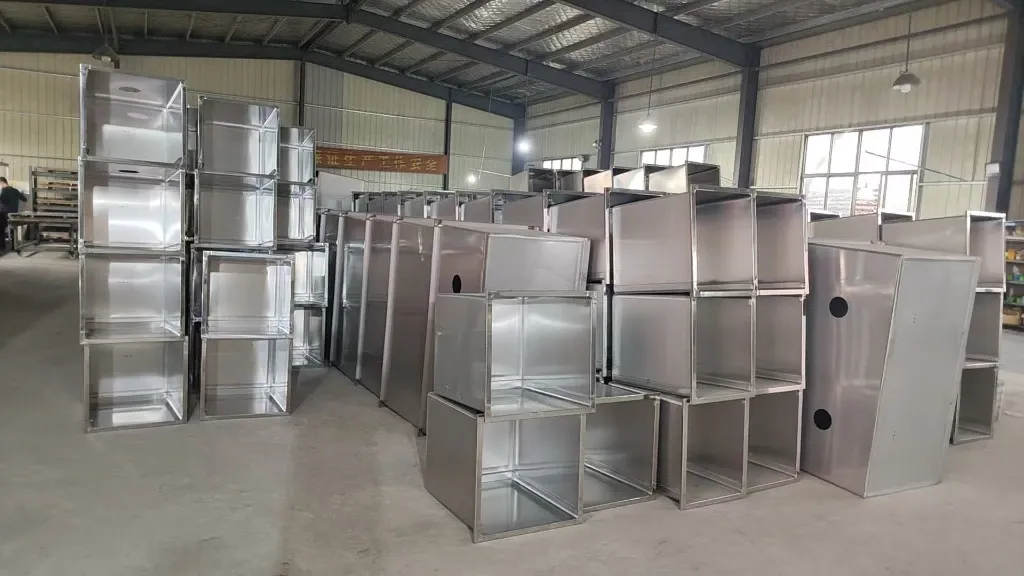
At our Nantong factory, sheet steel is checked when it arrives, not when a customer complains. Thickness is measured with a caliper, grade is matched against the mill certificate, and sheets that don't match go back. That is why a cage built in March matches one built in September. The full pre-shipment list — welds, dimensions, moving parts, packing — is in our factory checks article, and the same discipline applies to complex builds like theVTSICU-04 ICU cage.
Where Thickness Matters: A Quick Comparison
Part | What it faces every day | What to ask for |
Table top | Full patient weight, leaning, jumping | Thickness in mm; welded support frame |
Cage door | Dozens of openings a day | Thickness in mm; latch alignment after fitting |
Cage frame | Trolleys, buckets, kicks | Tube wall thickness; welded corners |
Tub basin | Water weight, moving animal | Thickness in mm; smooth basin-to-frame welds |
Back panel / divider | Almost no load | Thinner sheet is fine |
Frequently Asked Questions
Can I measure the thickness after delivery?
Yes — a cheap caliper on an exposed edge tells you in seconds. But agree the numbers before the order ships, when changing them costs nothing.
Does thicker always mean better?
No. Right thickness in the right place beats heavy steel everywhere — too thick just adds weight and freight.
Is a thick 201 panel as good as 304?
No. Thickness is about strength, grade about corrosion. A thick 201 panel still rusts faster in a wet clinic. Ask for 304 where water and cleaning chemicals are part of the daily routine.
Request a Quote
Ordering cages, tables or tubs? Send us the room, the animals and the daily load, and we will confirm grade, thickness and dimensions before you order. Minimum order is 1 piece, standard orders ship about 10 days after payment — see our veterinary equipment manufacturer page for how OEM and custom orders work.