OEM & Customization
OEM Veterinary Equipment Orders: Branding, Samples and Lead Times
Ordering OEM veterinary equipment is more than picking a model. What to put in your brief — branding, samples, drawings and lead time — so the factory builds it right the first time.
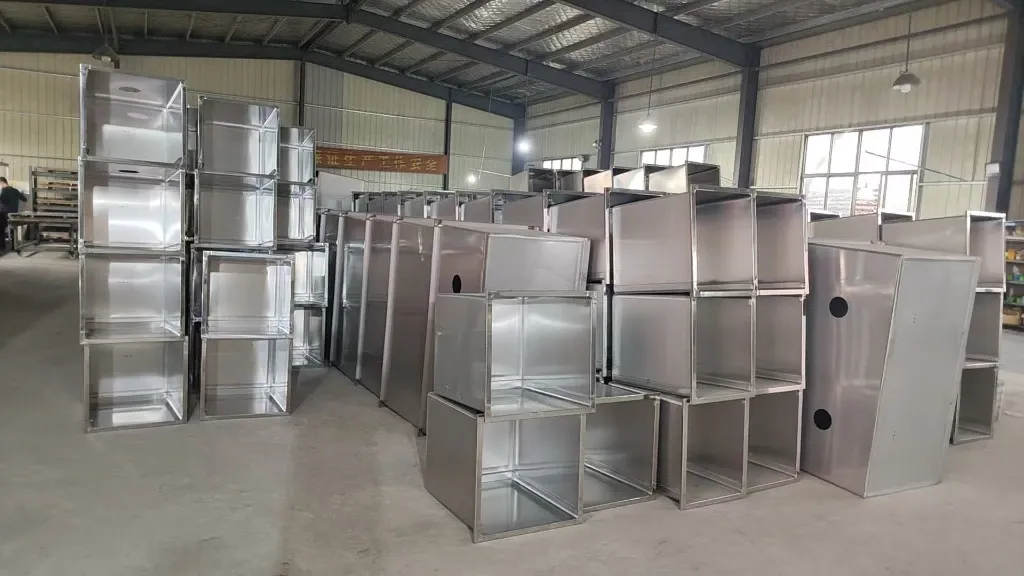
A distributor writes in: “We want your cage bank with our logo.” The factory writes back: “Send the brief.” Then nothing happens for a week, because nobody wrote down what “our logo”
Most OEM trouble is not bad welding or late shipping. It is a brief that left out one line. So before you ask for a price, write the order the way the factory will read it.
- Write the brief the factory will actually build from
A good brief fits on one page:
- Which model as the base — a standard cage, table or tub, or a size you need changed.
- Who uses it and how: dogs, cats, how many a day, wet room or dry room. That decides the steel, the finish and the fittings.
- Your branding: logo artwork, where it goes, how big. Send the artwork file, not a screenshot.
- Colour and finish, if any. Bare 304 stainless steel has no colour choice; a powder-coated panel or a coloured door does.
- Packaging and marking: your brand on the carton, handling marks, any manual or label in your language.
- Voltage and plug, for anything electric — a table wired for the wrong country is a return, not a repair.
- Quantity, destination country and the date you need it by.
If a detail is not in the brief, the factory has to guess it or stop and ask. Guessing is how a logo ends up on the wrong panel.
- Agree the branding before production, not after
Logo, colour and packaging are simple, as long as they are agreed before the first unit is built. Print method and placement depend on the material: a logo etched on stainless steel is not the same job as a sticker on a carton, and the factory will confirm what works on your model at the sample stage.
Send artwork in a proper file and ask for a proof — a photo or drawing showing the logo where it will sit. A proof costs a day. Reprinting a finished batch costs far more, and on a cage bank it may not be possible at all without stripping the panel.
- Ask for one sample first — then check it like the bulk order
For a first OEM order, one sample unit is the cheapest insurance you will ever buy. Vetese's minimum order is one piece, so a single branded unit is a real option, not a favour to negotiate.
When it arrives, do not just look at the logo. Run the same checks you would run on ten units: open and close the doors, check the welds, measure it against the drawing, run the lift or the electrics through their full range. Our factory-checks article lists what to look for before shipping, and our handover checklist covers what to check when equipment arrives — the sample is your chance to do both in your own room, with your own animals in mind.
If something is wrong, say so now, in writing, with a photo. Changes at the sample stage are a conversation. Changes after bulk production are a second order.
- Confirm the drawing before the factory starts
On a custom or branded order, the factory should send you a drawing — dimensions, door positions, logo placement, voltage — and ask you to confirm it. Do not wave it through. Measure it against your room, your door and your existing equipment, the same way our delivery checklist asks you to measure before ordering.
A signed drawing protects both sides. The factory builds what you approved, and you have a fixed reference if the delivered unit differs. If a supplier will not send a drawing before production, treat that as information about how the order will go.
- Ask when the clock starts — and what the days include
“Ten days” can mean ten days from your email, from the deposit, or from the day the drawing was approved. Ask which one. At Vetese, delivery is about ten days after payment is received — so the date that matters is the payment date, not the day you first asked for a quote.
Also ask what the lead time covers: production, checks before shipping, and packing, or production only. Shipping is separate, and on an export order it is usually the longest part of the wait. A realistic plan counts production, then packing, then the freight — not just the first number in the email.
Step | What to agree in writing | Why it matters |
Brief | Model, sizes, logo, colour, packaging, voltage, quantity, destination | The factory builds what is written down |
Branding proof | Logo file, placement, proof photo or drawing | Reprinting a finished batch is costly or impossible |
Sample | One unit, checked like the bulk order | Catches problems before ten units carry them |
Drawing | Dimensions, logo placement, voltage confirmed | A signed drawing is the reference if anything differs |
Lead time | Start date, what the days include, shipping separate | “Ten days” means nothing without a start date |
FAQ
Can I order just one branded unit?
Yes. Vetese's minimum order is one piece, so a single unit with your logo is a normal order — and the sensible way to check quality before a larger run.
Does OEM mean a brand-new design?
Not necessarily. OEM usually means an existing model built with your branding, logo and packaging. A completely new design, with new tooling, is ODM — a bigger job, with a longer lead time.
What if the sample isn't right?
Tell the factory before bulk production starts, with photos and the exact change you need. That is what the sample is for. Once production has run, the same change costs far more.
Request a quote
Send Vetese your product list, your logo artwork, the sizes you need and your destination. Tell us what should carry your brand and when you need it, and ask what checks and documents come with the order.