Clinic Workflow & Care
Veterinary Recovery Room Workflow: After Surgery, Before the Ward
Where to put recovery cages, how to hand over after surgery, keeping patients warm and visible, and a fast reset between cases — a practical workflow for clinics.
The worst part of a surgery day is rarely the surgery. It is the twenty minutes after it, when the patient is waking up, the next case is waiting, and nobody is quite sure who is watching the recovery cage.
A recovery room is not a spare room with cages in it. It is the handover point between the operating table and the ward, and it works best when it is planned as one: close to theatre, easy to see into, warm, quiet, and quick to clean and reset.
1. Put recovery next to theatre, not at the end of the corridor
Every minute spent wheeling a waking animal down a corridor is a minute nobody is watching it properly. Put the recovery cages as close to the operating room as the building allows, on the same floor, with a straight route and no doors that need two hands to open.
Walk the route with a cage or trolley before you fix the layout. Our prep-room layout checklist uses the same walk-through: follow one case from door to table and onward, and note where people cross and where a trolley pauses. Recovery needs the same test, in reverse.
2. Make the handover one short conversation, at the cage
The handover from theatre to recovery should happen at the cage, not later in a corridor. Whoever brings the patient says, in plain words: what was done, what to watch for, and what is already connected — oxygen, fluids, monitoring, warming. The person taking over repeats it back.
Write it down on a card on the cage door, not only in a file somewhere else. Name, procedure, time out of theatre, and who is responsible until the patient moves to the ward. Our handover checklist for clinic staff is about equipment ownership, but the same habit applies: one record, one named owner, no guessing.
3. Keep the animal warm, visible and easy to reach
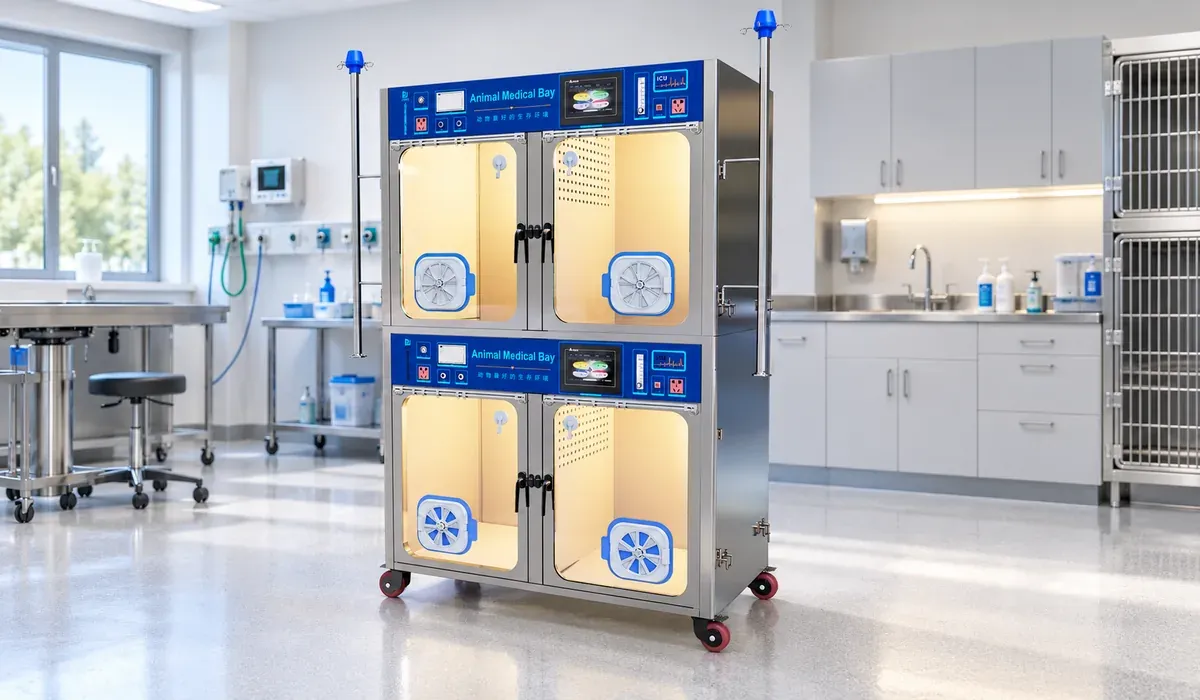
A waking animal cannot move away from a hot spot or tell you it is cold. Warmth has to be even, checked, and easy to turn down — a heated cage or warming support the team already knows how to use beats a new device nobody has practised with. Ask the supplier how the warming works, where the controls sit, and what happens if the power drops, before the room is in use.
Visibility matters as much as warmth. Staff should be able to see the animal's chest moving and its colour without opening the door every few minutes. Good light helps here too — the same low-shadow thinking in our surgical light guide applies at the recovery cage, just at a lower intensity.
If a patient needs oxygen or closer observation, that is what an ICU cage is for. Our ICU cage guide covers oxygen supply, temperature control, alarms and cleaning for that unit — decide before ordering which patients go to a standard recovery cage and which go straight to ICU, so nobody is deciding it mid-case.
4. Decide in advance when a patient moves to the ward
"When it looks ready" is not a plan. Agree beforehand what the team checks before a patient leaves recovery: awake and steady on its feet, breathing normally, warm, and able to stay that way without constant watching. The vet on the case makes the call; the room plan just makes sure the call is not delayed by a missing cage, a dirty ward cage, or nobody free to move the patient.
Keep one ward cage clean and ready during a surgery list, not all of them. That way the move is a short walk, not a cleaning job in the middle of the list.
5. Clean and reset between patients, every time
Reset the cage as soon as the patient leaves, while the next case is still in theatre: waste out, surfaces wiped to the supplier's instructions, bedding changed. Our cage cleaning checklist covers what to ask about materials and access before buying.
Restock at the same time: oxygen connection checked, warming ready, a clean blanket, and the observation card blank and waiting. A five-minute reset is what keeps a surgery list on time.
Step | What to settle in advance | Why it matters |
Location | Next to theatre, straight route | Less time unwatched |
Handover | At the cage, spoken and written down | Nothing gets lost between teams |
Warming & visibility | Even warmth, clear view, working light | A waking animal cannot move away or speak up |
Move to ward | Agreed checks, one cage ready | No delay, no mid-list cleaning |
Reset | Clean, restock, card blank | The next patient arrives to a ready cage |
FAQ
Does a small clinic need a separate recovery room?
Not necessarily a separate room, but it does need a separate, quiet area near theatre — not a corridor, and not the ward. The point is short distance, good visibility and no through-traffic.
Should every patient recover in an ICU cage?
No. An ICU cage is for patients that need oxygen, controlled temperature or close monitoring. Most patients recover in a standard cage, as long as someone is watching and the move to the ward is planned.
What should we send a supplier when planning a recovery area?
The room plan and doorway sizes, how many patients recover at once, which cages need oxygen or warming, and the power available. Our delivery checklist covers measuring access before ordering — recovery cages are no exception.
Request a quote
Send Vetese your room plan, how many recovery cages you need at once, and whether any of them need oxygen, warming or ICU functions. Tell us the doorway sizes and the power available, and we will tell you plainly what fits, what needs a drawing first, and when it can ship.